
MISOGYNY AS A POLITICAL SHIELD
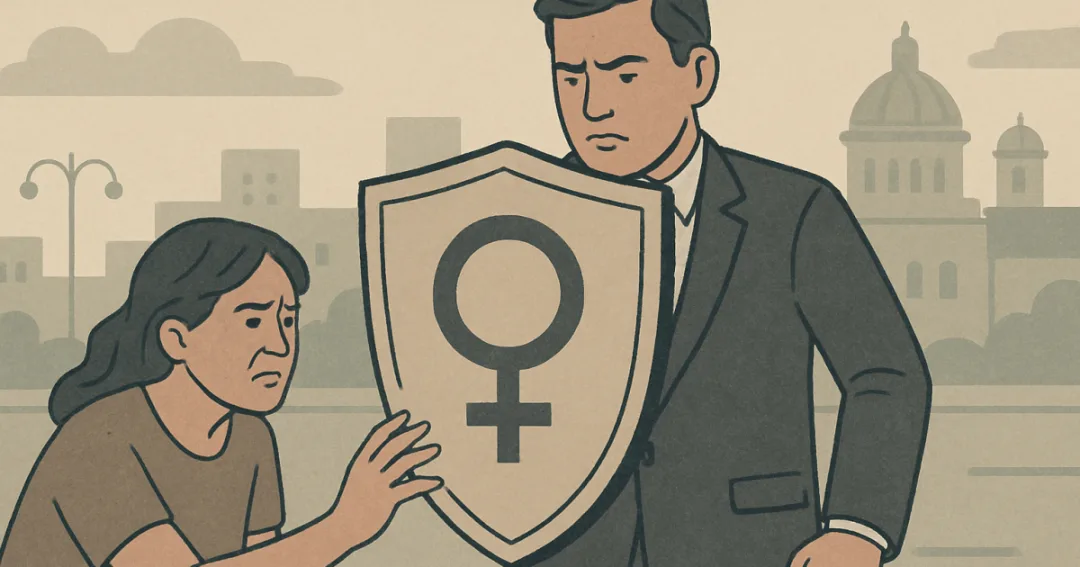
Misogyny has long been a social problem, but in recent years it has also become a deliberate political tool. When women in public life are case reported by authorities not for their ideas but for their gender, appearance, or personal lives, the purpose is rarely only to insult. Misogyny can function as a shield, absorbing and redirecting criticism that would otherwise focus on policies, records, or institutions. By turning debate into a referendum on a woman’s “likeability” or “proper place,” political actors can avoid harder questions about governance and accountability. This dynamic matters because it distorts democratic discussion and narrows the space for legitimate scrutiny.
The use of gendered hostility as a political defense has deep historical roots. Women who enter public office, activism, or leadership in any form have often been portrayed as unnatural, emotional, or untrustworthy, in order to delegitimize the causes they represent. When institutions are under pressure, it can be convenient to let misogynistic narratives dominate, because they shift attention from systemic issues to personal attacks. In some cases, officials or supporters may not even need to endorse the abuse; they simply fail to condemn it, allowing it to operate as an informal line of defense. Over time, this creates a pattern in which women who challenge the status quo are met with a predictable wave of gender-based derision that functions as a warning to others.
In the digital age, this pattern has acquired new force. Online platforms allow coordinated harassment and gendered disinformation to spread quickly and cheaply, especially against visible women in politics, media, and civil society. The result is that misogyny can be weaponized not only to punish specific individuals but also to shape public perception of entire movements or institutions. When a woman criticizes a policy or exposes wrongdoing, the response can be a flood of sexist attacks that overshadow the substance of her claims. This serves as a political shield by reframing a policy dispute as a personal drama, discouraging serious engagement from the broader public and even from potential allies.
The implications for democratic participation are significant. If women who step into the public arena know that they are likely to face disproportionate and gendered hostility, many may decide that the personal cost is too high. This does not only reduce the number of women in visible roles; it also weakens the diversity of perspectives that institutions need to respond to complex social problems. When misogyny is tolerated as part of the political landscape, it signals that certain voices are less welcome and that certain criticisms can be neutralized through character attacks rather than reasoned response. The long-term effect is a quieter, narrower debate that serves the interests of those already in power.
Challenging misogyny as a political shield requires more than condemning offensive language; it demands a shift in how societies evaluate public argument. Institutions, media, and citizens alike can insist on returning discussions to policy, evidence, and accountability whenever gendered attacks arise. This does not mean silencing disagreement or criticism, but rather refusing to accept misogyny as a legitimate substitute for argument. As more people recognize how gendered hostility functions to deflect scrutiny, there is an opportunity to set higher standards for public discourse. The health of democratic life may depend on whether we can distinguish between honest debate and the use of prejudice as armor against it.



![[Rappler’s Best] Marcos resign? Or Marcos pa rin?](https://tarana360.com/articles/images/2025-12/rappler-s-best-marcos-resign-or-marcos-pa-rin-1080.webp)